

















Starship Reaches Orbit for the First Time, Comes Home Early
Updated September 28, 2026, at 12:00 p.m. ET:
Today was a great day for SpaceX. Starship lifted off from Starbase, Texas, at 8:49 a.m. ET and began its ascent to space. About two and a half minutes into the flight, the Super Heavy booster separated from Starship and went on to make a controlled splashdown in the Gulf of Mexico.
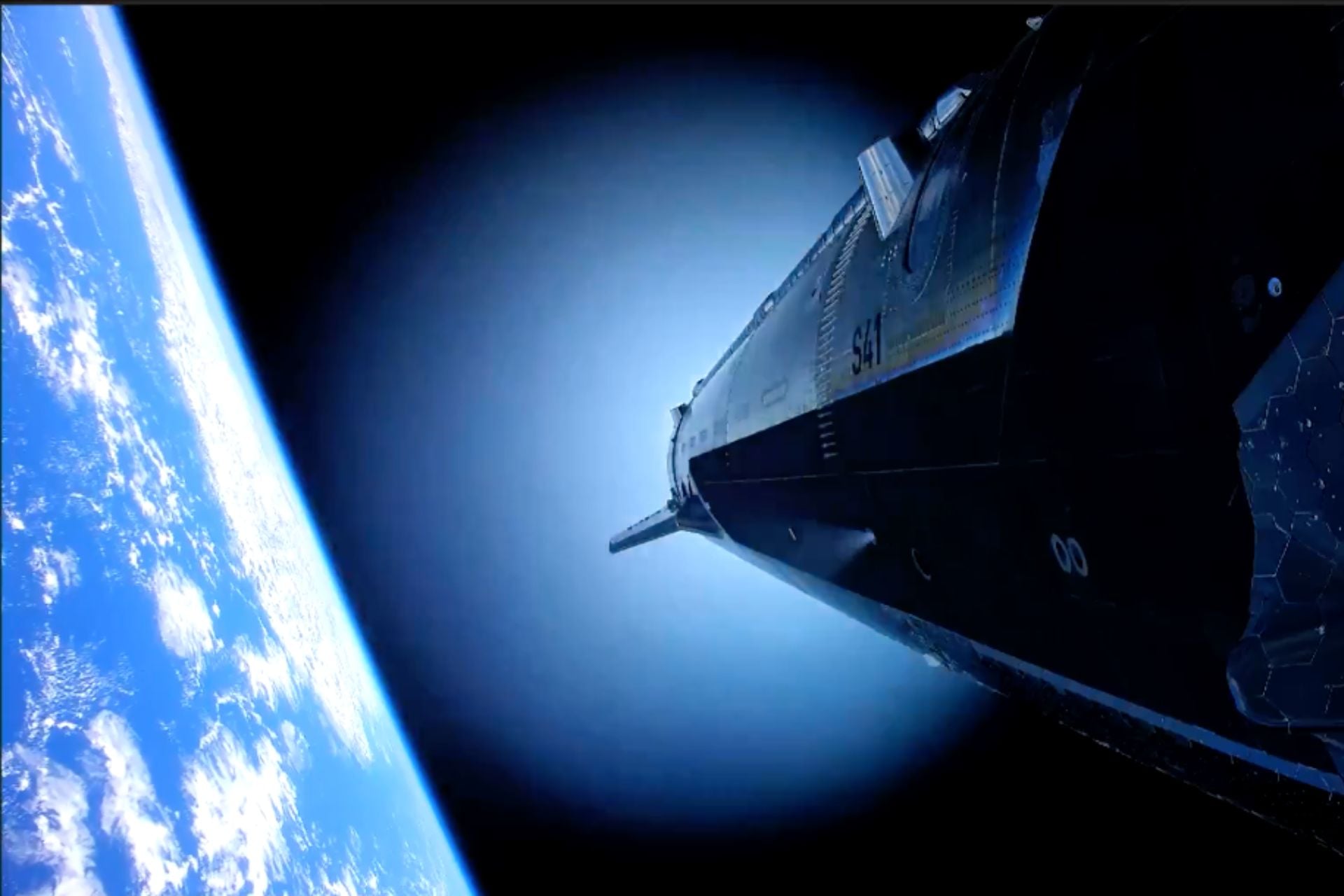
Starship performed an initial engine burn to reach space, during which one of its Raptor 3 engines unexpectedly shut down. For a moment, flight controllers thought they would have to stand down from the orbital insertion burn. After several nail-biting minutes of deliberation, they decided to proceed, and Starship successfully ignited a single engine to circularize its orbit at an altitude of roughly 170 miles (275 kilometers).
Starship reached orbit for the first time ever at approximately 9:15 a.m. ET. Shortly after, the vehicle deployed all 26 of the Starlink V3 satellites that will go on to operate as part of the megaconstellation.
Two and a half hours into the flight, SpaceX decided to return Starship from orbit early after evaluating its status. The vehicle reentered Earth’s atmosphere around 11:40 a.m. ET and made a controlled splashdown in the Pacific Ocean at 11:57 a.m ET. Despite the early end to what was supposed to be a 10-hour flight, Starship achieved its core objectives, marking a major step forward in the megarocket’s development.
Original article follows.
SpaceX is gearing up for Starship’s 14th test flight, and it should be one for the history books. Up until this point, all Starship test missions have been suborbital, but this time, the megarocket will attempt to enter orbit and circle the planet about six times over the course of an epic 10-hour flight.
After completing a wet dress rehearsal on Thursday, Starship is standing proud on the launch pad at Starbase and could lift off as early as this coming Monday. SpaceX is targeting a launch window that will open at 8:15 a.m. ET and remain open for 75 minutes. The company will begin live-streaming the test mission about 30 minutes before liftoff, and you can watch via its website, X page, or the third-party livestreams below.
Starship’s 14th flight is set to launch on Monday, Sept 28. The 75-minute launch window opens at 7:15 a.m. CT. Live coverage of the mission starts ~35 minutes before launch → https://t.co/uQKQvgaTmJ
— SpaceX (@SpaceX) September 27, 2026
Starship’s greatest challenge yet
Demonstrating orbital flight is a key hurdle Starship must clear before it can regularly deploy SpaceX’s larger Starlink V3 satellites, aid NASA in returning astronauts to the Moon, and achieve the full, rapid reusability that will secure the rocket’s commercial viability.
Needless to say, there’s a lot riding on this test mission, and yet it will start out like any other. At T-0, the Super Heavy booster will ignite its engines and propel Starship toward space. The booster will separate from the upper stage, commonly called “Ship,” about two minutes after launch and aim for a controlled splashdown in the Gulf of Mexico. SpaceX has made some upgrades to Super Heavy’s engines since several malfunctioned during the last test flight, so it will be interesting to see how the booster performs this time.
After stage separation, things should really get interesting. At first, Ship will coast on the same passively safe suborbital trajectory it followed during the past 13 test flights. This will give flight controllers a chance to check out the vehicle’s systems and make sure everything is functioning normally. If anything goes awry, Ship can continue on its suborbital trajectory for splashdown in the Indian Ocean. But if flight controllers give the green light, Ship will attempt a 19-second burn to speed up to orbital velocity.
Once it has entered into orbit, Ship will attempt to deploy 26 Starlink V3 satellites. Unlike the dummy satellites deployed during previous Starship test flights, these ones will actually be operational, adding 26 terabits per second of capacity.
Ship will then aim to complete six trips around the planet over the course of a nearly 10-hour flight. Flight controllers will continuously monitor the vehicle and execute an early water landing if anything goes squirrely. They’ll primarily be watching for engine anomalies, loss of power or communications, issues with flight computers and navigation sensors, damage to the propellant tanks and feed lines, changes in tank pressure, and loss of attitude control.
If all goes according to plan, Ship will execute a deorbit burn using a single Raptor engine, putting the vehicle on a path for atmospheric reentry and splashdown in the Pacific Ocean.
It’s difficult to overstate the technical leap SpaceX is attempting to make between Starship’s last test flight and this one. The success of this mission would mark the start of an exciting new phase of the mega rocket’s development and bring SpaceX closer to achieving its ambitious goals.