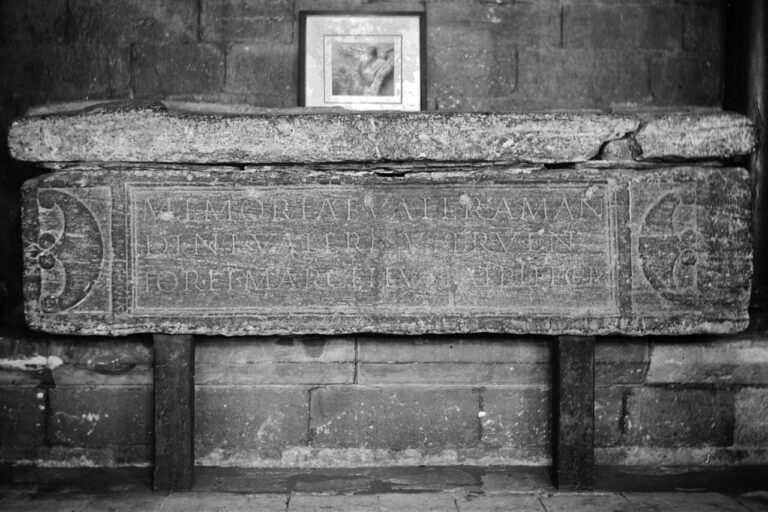




















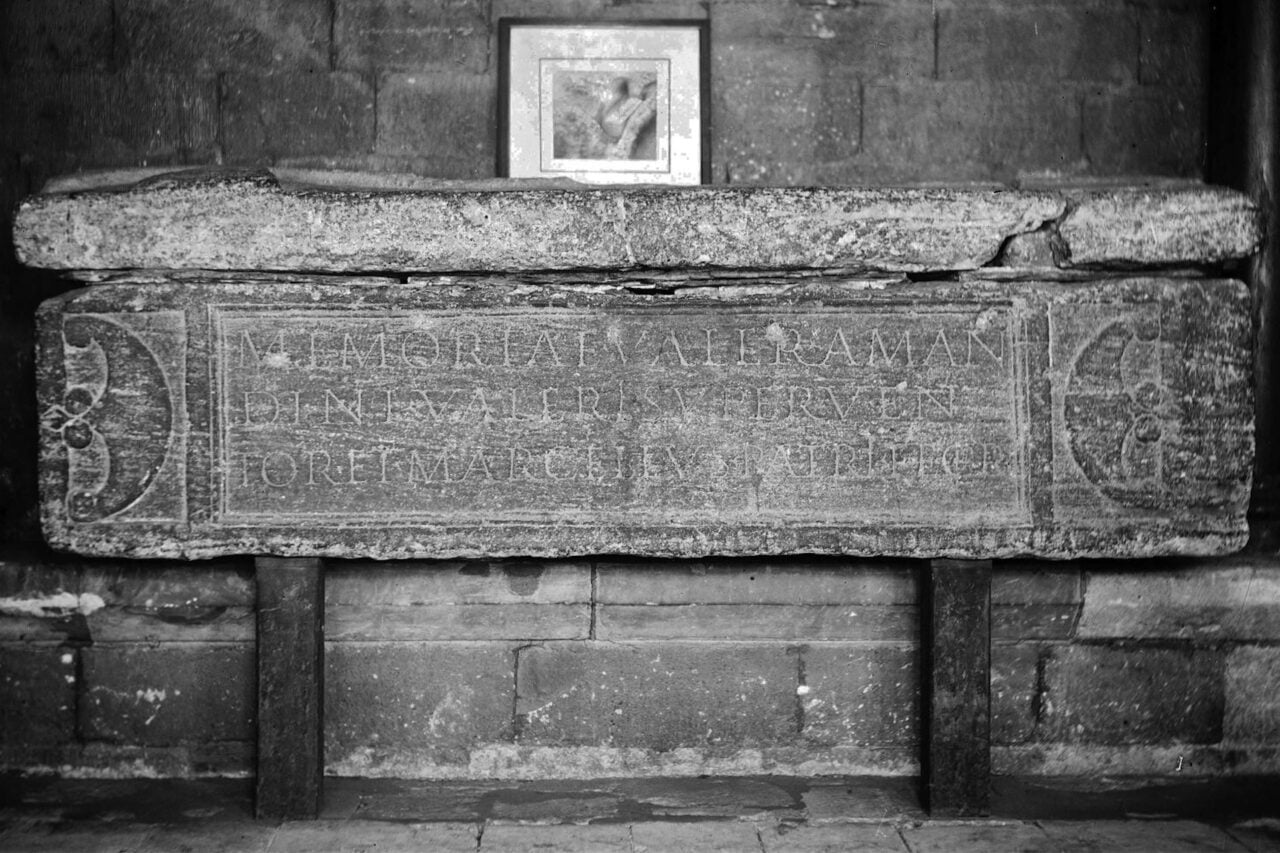
More than a few things have been strange about the large, late Roman-era sarcophagus first unearthed from the grounds beside Britain’s famed Westminster Abbey over 200 years ago. Three lines of Latin, deeply engraved into its limestone exterior, claim that this ancient sarcophagus once entombed Valerius Amandinus, an obscure figure apparently from Rome’s ancient outpost of Londinium—but sometime in the 11th century his body had clearly been replaced.
The first clue was the incongruous lid atop Amandinus’s 4th-century burial container: a single, rectangular slab of sedimentary oölitic limestone tapered in late Anglo-Saxon style and chiseled into a relief-carving of an early medieval cross. But now—thanks to some detailed carbon-14 dating, a dive into the Abbey’s medieval records, and a deeper analysis of the sarcophagus itself—the identity of the coffin’s new occupant has been narrowed down to just two candidates.
Both are former 11th-century abbots of Westminster, according to the Abbey’s consulting archaeologist Warwick Rodwell, one named Ælfwig, who led the monastery in this role from 993 to 1020 CE, and another named Wulfnoth, who succeeded him until 1049 CE. Rodwell’s personal assessment, however, is that Ælfwig is the more likely of the two.
“Ælfwig was already a monk of Westminster when he was elected abbot, and there is no evidence to suggest that he ever left the abbey,” Rodwell wrote in his new study published with the Journal of the British Archaeological Association on Tuesday. “He had a distinguished career as abbot that lasted about twenty-seven years, and there can be little doubt that he was buried in his abbey.”
Exquisite corpse
Rodwell’s analysis received a critical assist from osteologist James Young Langthorne, a consultant with Pre-Construct Archaeology (PCA), which helps U.K. infrastructure projects respectfully work around the nation’s priceless troves of buried history. Langthorne determined that the prior established age of the deceased—as rendered by the anthropologist Thomas Henry Huxley and a colleague in 1869—was off by potentially two decades.
Working primarily with the corpse’s long bones, Huxley and archaeologist John Thurnam had assessed that the skeleton had once belonged to a young man “probably not more than thirty years of age,” according to their 1870 findings. Langthorne’s revision puts the deceased’s age anywhere between 35 and 49 years old, informed in part by the presence of the bone disease osteoarthritis at numerous locations along the joints of the 11th-century corpse’s skeletal remains.
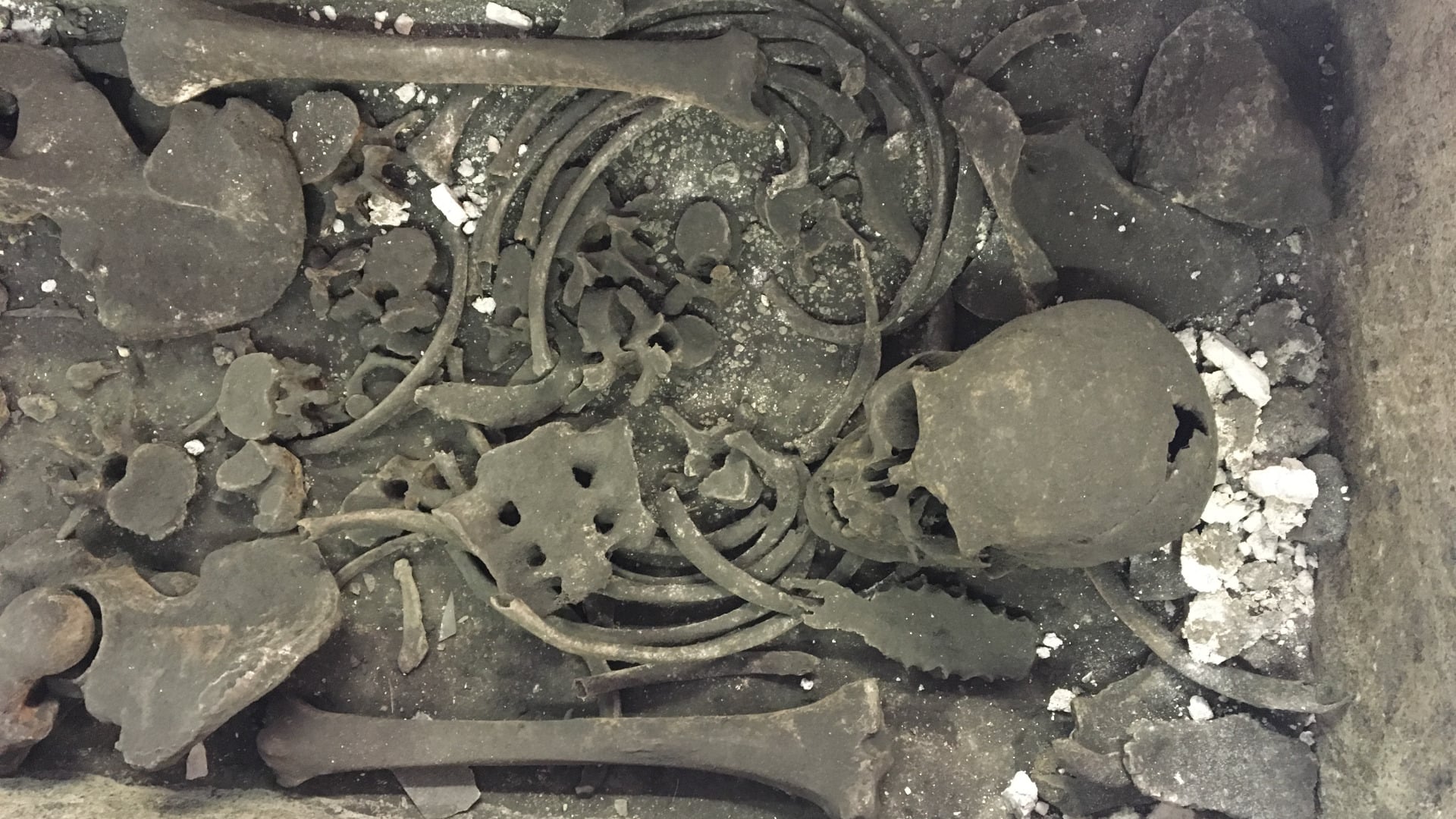
Further carbon dating of a bone sample, conducted by the Scottish Universities Environmental Research Centre, isolated the remains to a date between 987 and 1052 CE, further confirming that this Roman sarcophagus had been reused sometime in the earliest decades of the abbey’s existence.
Rodwell’s reasoning from there becomes more deductive and speculative, by his own admission, but in his view the fact that the deceased was “honoured with a fine sarcophagus,” topped with a 6-foot (1.8-meter) high Latin cross, “should imply that he was almost certainly an abbot.” Given that little information has survived about Wulfnoth, Ælfwig’s successor in the role, Rodwell leans slightly toward the more esteemed of these two former Westminster abbots resting in this sarcophagus.
Grave violations
We may never get the details needed to confirm the skeleton’s identity, however, thanks to the dubious actions of workmen, who accidentally encountered and broke the sarcophagus on Easter Monday of 1820.
“Once the men had broken into the coffin, the urge to search for ‘treasure’ would have been irresistible,” Rodwell wrote. “All the long bones were removed and replaced incorrectly, and the skull was both shattered and transferred from the west end of the coffin to the east.”
This disarray, documented when the sarcophagus was rediscovered in 1869, “is typical of looting,” the archaeologist lamented. He added that “we will never know whether any metal or other intrinsically significant objects were present, and pilfered.”