













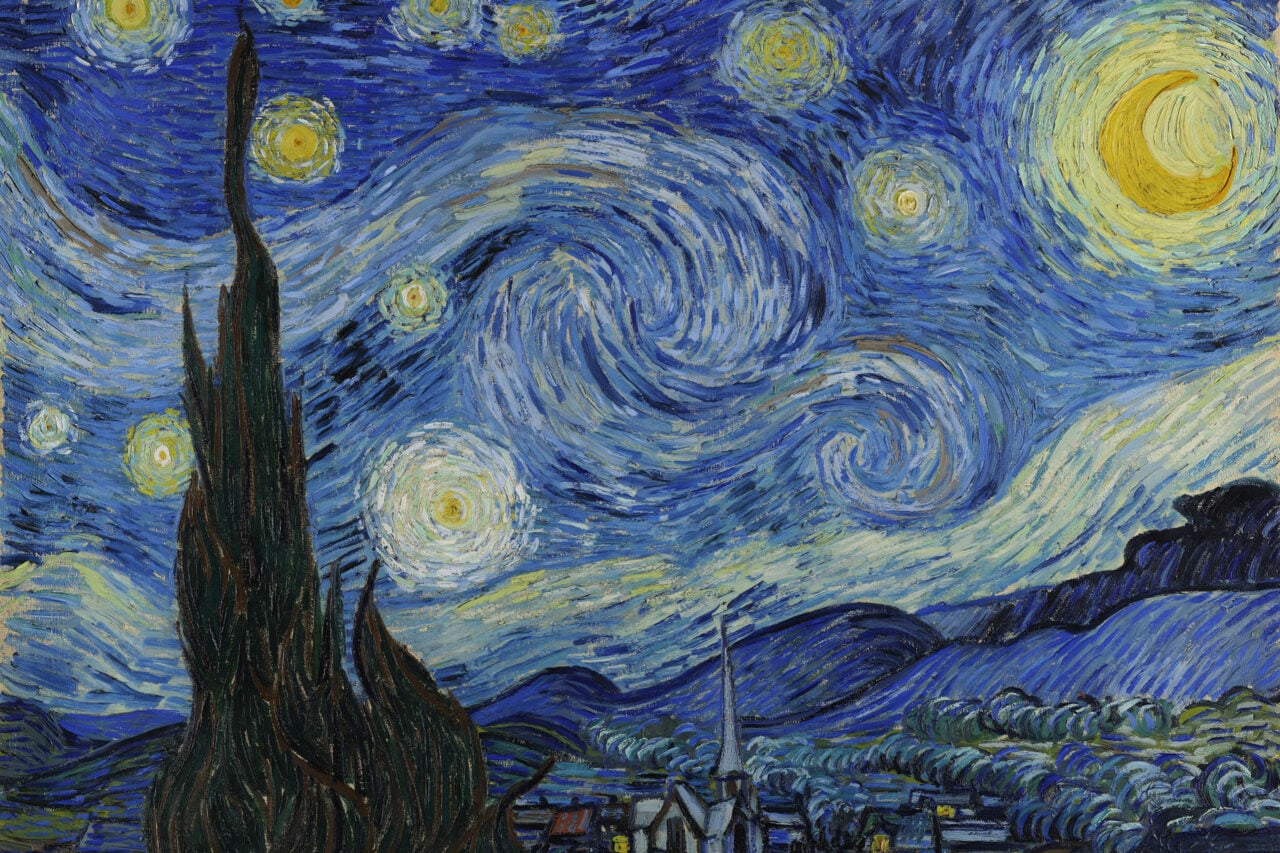
For a surprisingly long time, scientists have debated whether Vincent van Gogh’s The Starry Night was his fantasy, a symbolic representation, or an actual astronomical observation. Also surprisingly, many astronomers favored the latter, specifically that the painting depicted the night sky in June 1889.
But a study published today in Scientific Reports challenges that theory—and again, not in the direction you’d expect—and argues that The Starry Night likely represents the celestial arrangements of the sky before dawn on July 22, 1889. In what the team calls a project in “forensic astronomy,” the researchers studied astronomical simulations, historical weather records, and star positions, as well as van Gogh’s own letters from the time. Overall, all the evidence pointed to a late July date for the painting and simultaneously addressed concerns that brought doubt to the previous mid-June timeframe.
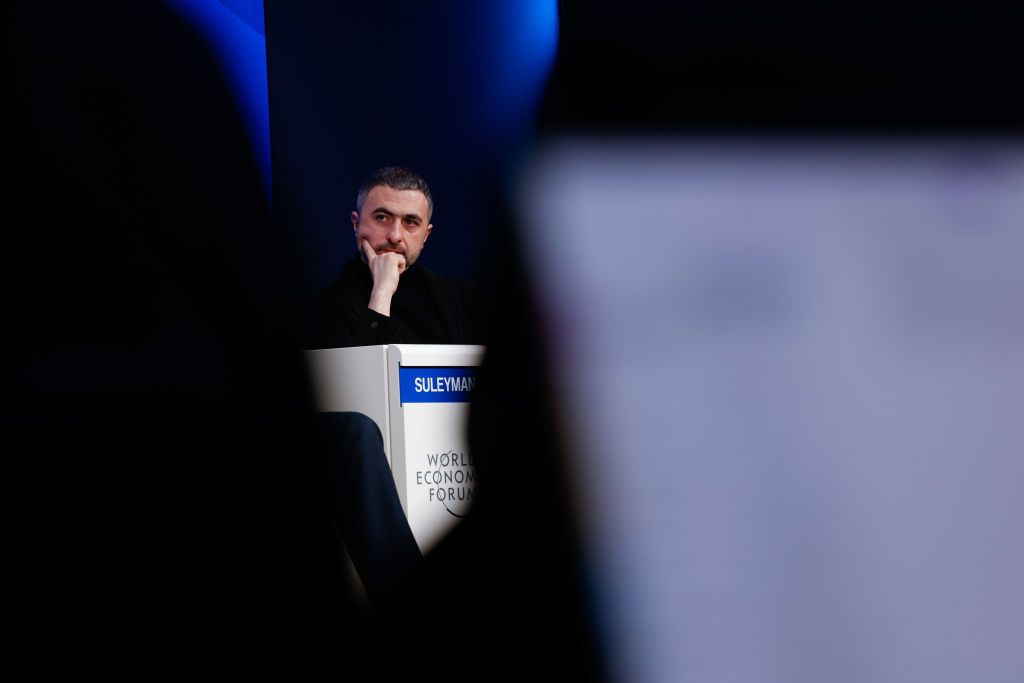
“This study shows that the sky depicted in The Starry Night corresponds observationally and geometrically with the actual dawn sky around July 22,” Elijah Jeong-hyun Kim, the study’s first author and the founder of SLLAB, a South Korean astronomy startup, told Gizmodo (self-translated from Korean). “So, we suggest that van Gogh ideated his work in June and completed it after July 22.”
Beyond academic boundaries
The latest work isn’t the first time that astronomers and physicists made The Starry Night the subject of their scientific pursuits. To give a recent example, in 2024 Chinese physicists argued that the painting’s iconic swirls showed van Gogh had a deep, intuitive understanding of natural phenomena like turbulence. But even earlier, influential scholars like art historian Albert Boime and astrophysicist Charles A. Whitneyseriouslyconsidered the possibility that the painting represented a (stylistic) depiction of an actual night sky.
It was these two studies—published in the 1980s—that proposed the date of June 1889, although this was soon contested by others in the field. As a result, according to the latest paper, this “observational reading has since remained a marginal minority view” and thus was never “quantitatively tested.”
When the stars align
Vincent’s “call” to Kim, as he put it, first came when he encountered previous work arguing that The Starry Night depicted the constellation Aries. That seemed off to Kim, who had spent most of his career developing celestial telescopes. As he explained to Gizmodo, this means you consistently witness the moment a telescope syncs with the night sky for the first time, and from that you inevitably memorize the positions of each star.
“And to me, the lights of The Starry Night looked more like the Hyades star cluster in the constellation Taurus,” he explained. “But that conflicted with the consensus that van Gogh suffered seizures mid-July, which was why the study became multidisciplinary—I had to reference different tools to track down what his life was like.”
For the latest work, Kim and his colleagues first established a framework based on astronomical simulations, astrometric reconstructions, and Procrustes fitting, or a geometric technique to quantify the reliability of an identified pattern—like that of a constellation. Before returning to van Gogh, the team applied its framework on other paintings from the early 17th century, as well as other paintings by van Gogh depicting the night sky in 1888.
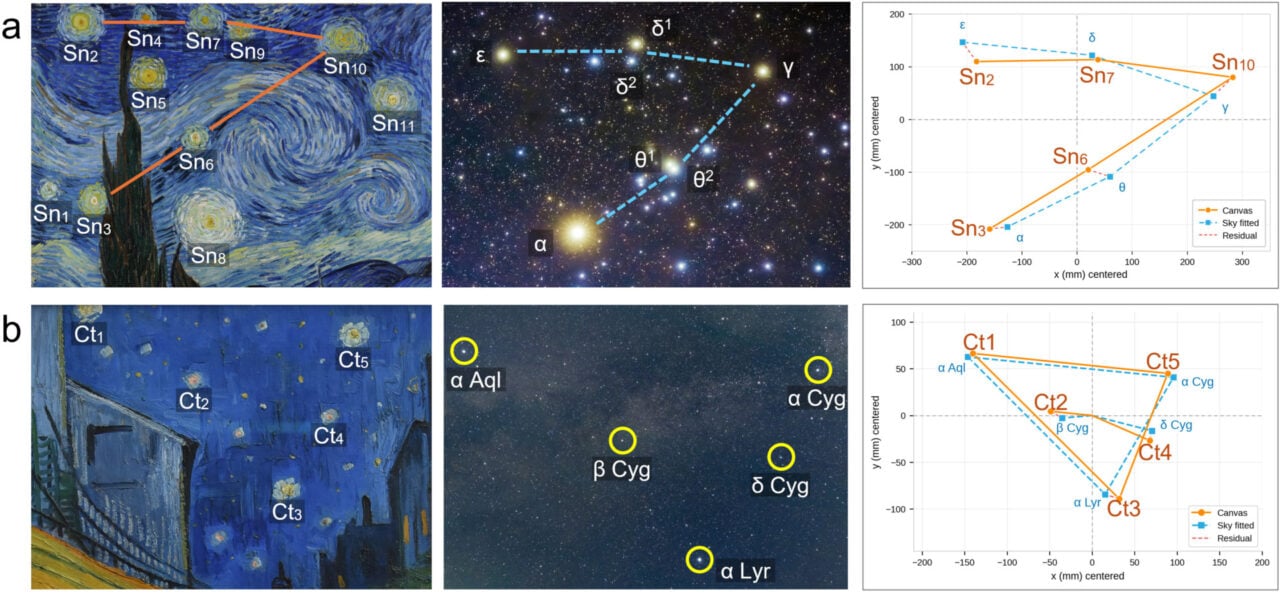
Then, using earlier sketches of the terrain seen in the final version of The Starry Night, the team estimated van Gogh’s narrow field of view from his studio. And all the evidence—the field of view, historical records on positions of the Moon, Venus, stars, and the weather—are all consistent with the dawn of July 22, 1889, according to the study. Importantly, these are all “mutually independent” constraints.
Art and observation
In other words, it’s too good of a coincidence to assume that The Starry Night’s sky was an arbitrary creation as opposed to a stylized—yet realistic—depiction of what van Gogh actually observed. To be fair, van Gogh himself described his work as “exaggerations from the point of view of the arrangement,” but the team added that an exaggeration “presupposes a real object to amplify.”
That said, the “correction,” so to speak, is arguably a minor one. It’s just a one-month difference. However, art historians have previously pointed out that the rest of van Gogh’s paintings from June were notably different from The Starry Night, Kim explained. Until now, that would have been another case against the astronomical interpretation of the painting. But with the new date, the “burden of explanation now reverses,” he added.
The life of a painter
But the observational matches alone “can’t irrefutably determine the completion date” for the painting,” Kim said, adding that van Gogh most likely compiled different observations over several days for his piece. The team also ran into several limitations as a result of incomplete or ambiguous meteorological records from the 19th century. Researchers have yet to find firm clinical proof on van Gogh’s seizure, either, so the conclusions of the study may shift should new historical sources come to light.
Having said that, the new work importantly shows that it’s possible for “forensic astronomy” to convert “art-historical interpretation into physically testable propositions,” according to the paper. Kim added that follow-up investigations will continue to explore this relationship for van Gogh’s other works.
“I’d say that van Gogh and the stars had an inseparable relationship,” Kim said. That’s quite evident in his letters to Theo, his brother. Since at least the spring of 1888, Vincent van Gogh’s thoughts were “filled with stars,” Kim explained, and it may be this passion that spoke to astronomers like himself, Kim said, that led to scientists answering van Gogh’s call.