















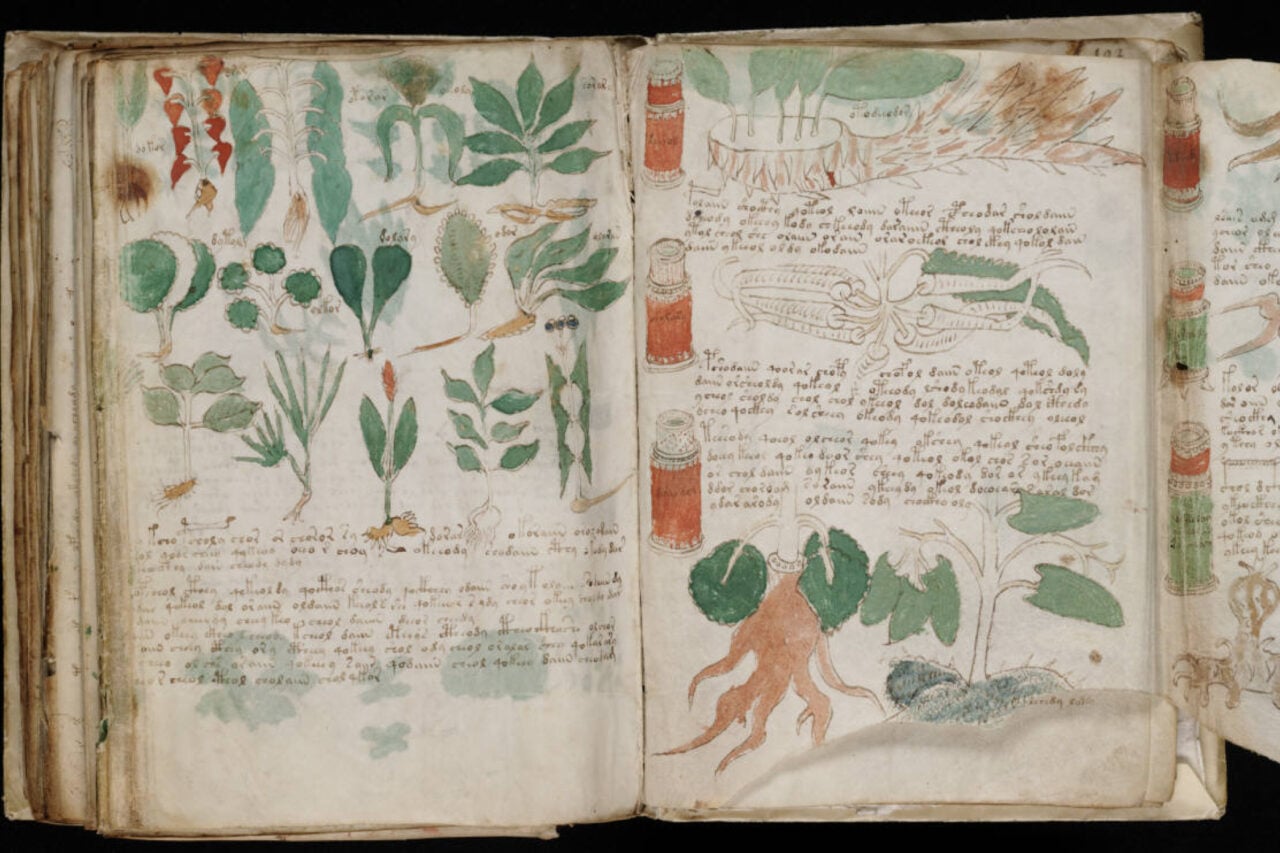
To quote medievalist Lisa Fagin Davis, there is “no medieval manuscript that has been seen, studied, analyzed, and debated more than the mysterious and as-yet-unread Voynich Manuscript.” Indeed, historians, linguists, and codebreakers have struggled to decipher this odd collection of letters—but what if there’s an issue with the manuscript itself?
New evidence, published in Digital Medievalist, suggests that the Voynich Manuscript was misbound. That is, the pages of the codex aren’t even in the right order, and that’s probably why we’re struggling to make sense of it. According to the study, the manuscript was probably intended to be read as a series of stacked bifolia, or sheets folded in half. But the version we have today was interpreted to be a quire, or folded pages sewn together to make a booklet. If true, it would partly explain why the manuscript appears so incomprehensible.
“This means that any research that relies on the current sequence of pages needs to be revisited, since the manuscript is out of order,” Davis, the executive director of the Medieval Academy of America, told Gizmodo. Davis co-authored the new paper with Colin Layfield, an information scientist at the University of Malta.
Do you speak Voynichese?
According to the Yale Library, where the manuscript currently lives, the codex was bought, sold, and gifted between many politicians and academics since the 16th century. Scholarly research on its contents began around 1912, when Polish American bookseller Wilfrid M. Voynich introduced it to the rare book market.
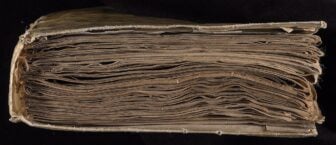
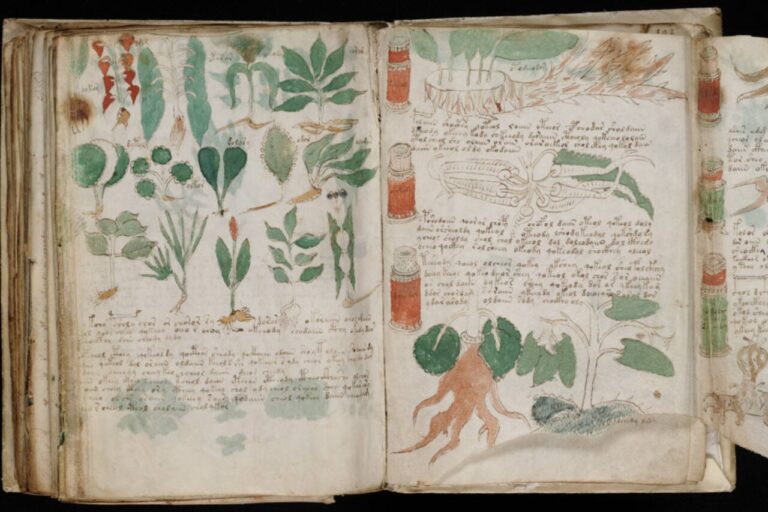
On first glance—as you can see for yourself here—the Voynich Manuscript looks like any other old book. But it was when scientists tried to make sense of the roughly 240 pages that they knew they had a mystery on their hands. Experts couldn’t decipher the many writings and drawings—and people began to say the book was written in “Voynichese.”
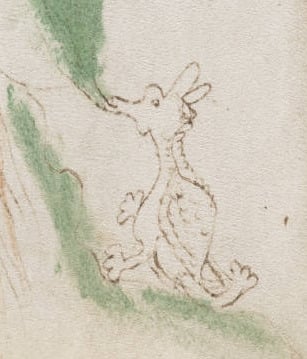
“It is written in a unique lettering system whose meaning is still unknown, after more than a century of work,” Davis told Gizmodo. “It could be a code, a lost language, nonsense, or something else entirely. The illustrations are equally bizarre, with fantastical plants, astronomical and zodiacal diagrams, bathing women, and other illustrations that are not interpretable yet.”
A manufacturing error
Naturally, scientists had to find a way to decipher the Voynichese, at times publishing dubious results. To be clear, there has been some good progress, but more than 100 years later, the general consensus is that our Voynichese is generally not great. From previous investigations, Davis and Layfield noticed a few things that were off with the document itself.
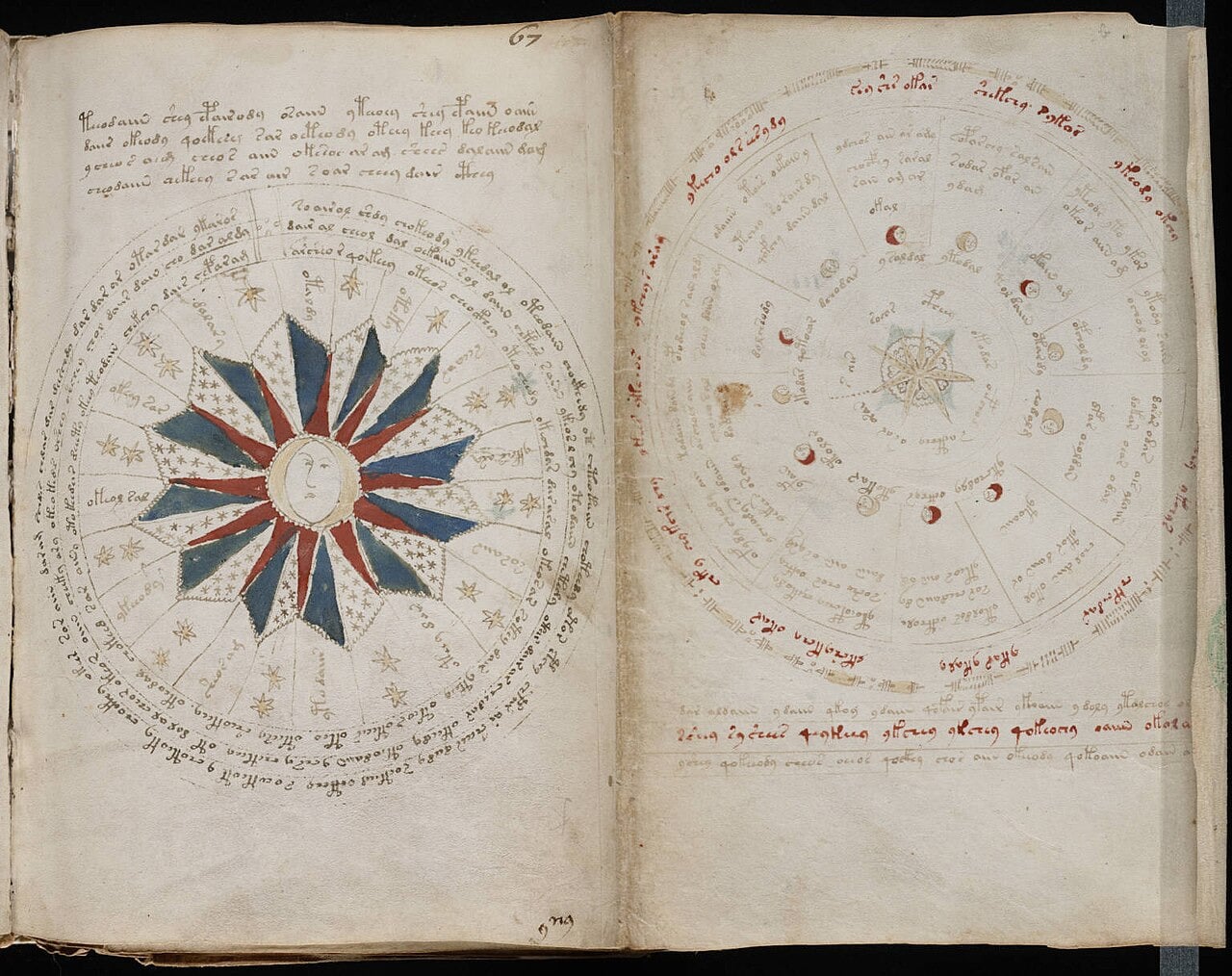
For instance, in a 2020 study, Davis found evidence that five different scribes contributed to the manuscript. This in itself was unusual, but even weirder was the fact that the “scribes alternate pages in ways that don’t make sense logistically,” she explained.
“Typically a single scribe writes in a quire ‘booklet,’ but the current binding has different scribes in the same quire, which, to be blunt, is simply not [how it is] done,” Layfield added. “That’s now how books are written.”
Rewritten from the ground up
The researchers used Latent Semantic Analysis (LSA), a natural language processing technique developed in the late 20th century. This technique is dated but is actually more effective in studying smaller datasets like Voynich, Layfield said. This analysis revealed an odd semantic similarity between the inner-facing pages, or the middle pages of a bifolia, typically interwoven with other pages.
In other words, “multiple pages would be in between the two pages of a high-scoring similarity,” Layfield explained. To test their hypothesis, the team tried ordering the pages, assuming that they were meant to be stacked bifolia—and things began to click.
For instance, some of the images trail off into the gutter of the book and emerge again on the other side. If the book were misbound, it’d make a lot of sense that multiple pages are seemingly crammed in between an image that should be connected, Davis explained. Layfield added that there was a section with an exaggerated first character that may indicate this page was supposed to be the first character of a section.
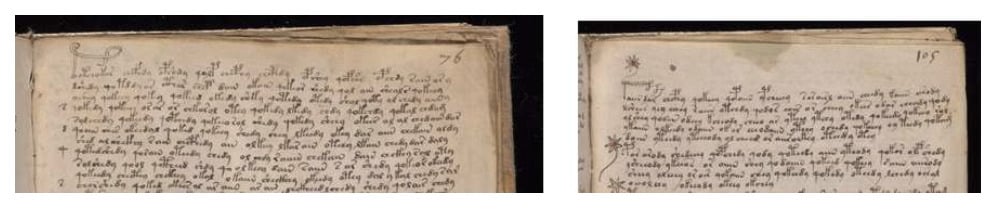
“Of course we can’t comment on the accuracy of the other pages re-ordered—as we can’t read them—but this result is telling,” he said.
Defect or miracle?
To Gizmodo, Davis explained that the team is thinking of how best to apply this methodology to other sections of the manuscript. Assuming the latest findings are true, it’d mean scholars had better reevaluate what they believe they understand about Voynichese. As the team wrote in the paper, a “book whose pages are out of order is almost certainly more difficult to read.”
At the same time, the latest work makes us think again about the people who created the manuscript hundreds of years ago, Davis said, adding, “Instead of a lone genius or madman, we are looking instead at a community of common practice, since at least five people knew how to write in what is called Voynichese.”